Because the most beautiful dress in the boutique and the most beautiful dress in your photographs are not always the same dress — and knowing the difference changes everything.
You have spent hours in fitting rooms. You have cried at least once. You have stood on a little platform in a dress that felt completely, absolutely right — and you were certain you had found the one. But here is something almost nobody tells brides before they buy: the dress that looks extraordinary in person does not always translate to the dress that looks extraordinary in photographs. And since photographs are how your wedding day will live on for the rest of your life, this is worth thinking about carefully.
This is not about choosing a dress you love less. It is about understanding how fabric, color, embellishment, and silhouette behave on camera — so that the dress you fall in love with is also the dress that makes every photograph look like it belongs in a magazine.
Here is what you need to know.
Fabric is everything — and the camera has opinions
Different fabrics photograph completely differently, and understanding why gives you a significant advantage when dress shopping.
Matte fabrics — crepe, chiffon, soft tulle, matte satin — absorb light evenly and tend to photograph cleanly and beautifully in almost every setting. They are forgiving in bright outdoor light, they hold their shape in movement shots, and they rarely produce unexpected results.
High-sheen fabrics — liquid satin, duchess satin, metallic jacquard — catch and reflect light, which can be extraordinary or challenging depending on the conditions. In golden hour outdoor light, liquid satin photographs like something celestial. Under harsh overhead indoor lighting or flash, the same fabric can appear washed out or lose its detail entirely. If you love a high-shine fabric, ask your photographer how they handle it — a great photographer will know exactly how to work with it.
Heavily textured fabrics — feathers, heavy beading, 3D florals — add extraordinary visual depth in photographs and tend to look even more impressive in images than they do in person. The camera rewards texture.
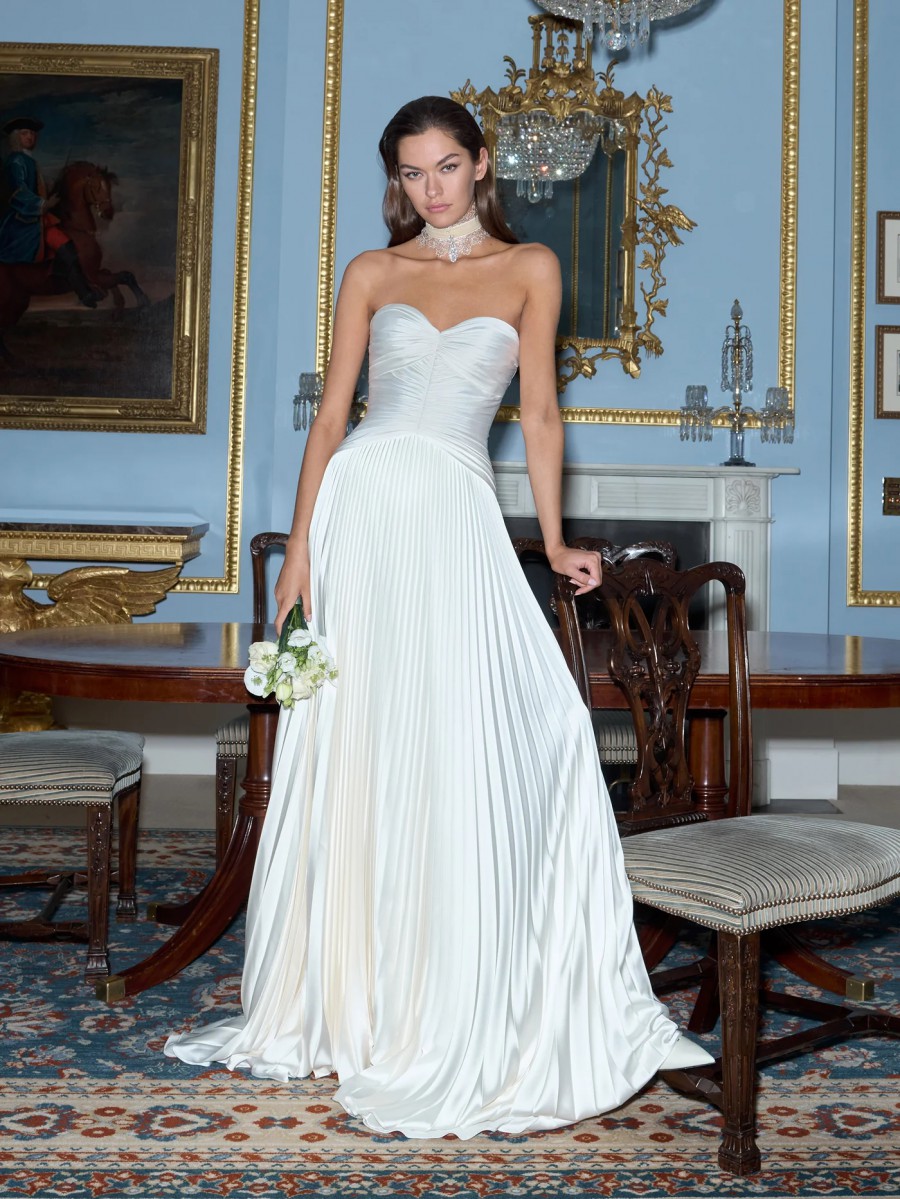
White and ivory photograph differently than you expect
This is one of the most important things a bride can know before she buys. Pure white is the most challenging bridal color to photograph well. Under bright natural light, white can wash out, lose detail, and appear almost completely flat — particularly with lighter skin tones. Intricate lace on a pure white gown can practically disappear in outdoor photographs.
Ivory, champagne, and soft ecru tones hold detail far more reliably in photographs. The slight warmth of the fabric gives the camera something to work with — lace patterns stay visible, embroidery reads clearly, and the overall image retains depth and dimension. This is one of the many reasons that new trending bridal colors are so compelling from a photography perspective: a soft blush, a warm champagne, or even a dusty blue gives every embellishment the contrast it needs to truly come alive on camera.
If you are set on white, discuss it with your photographer before the wedding. Knowing the conditions — the lighting, the venue, the time of day — will help them prepare to work with the fabric rather than against it.
Heavy embellishment can overpower in photographs
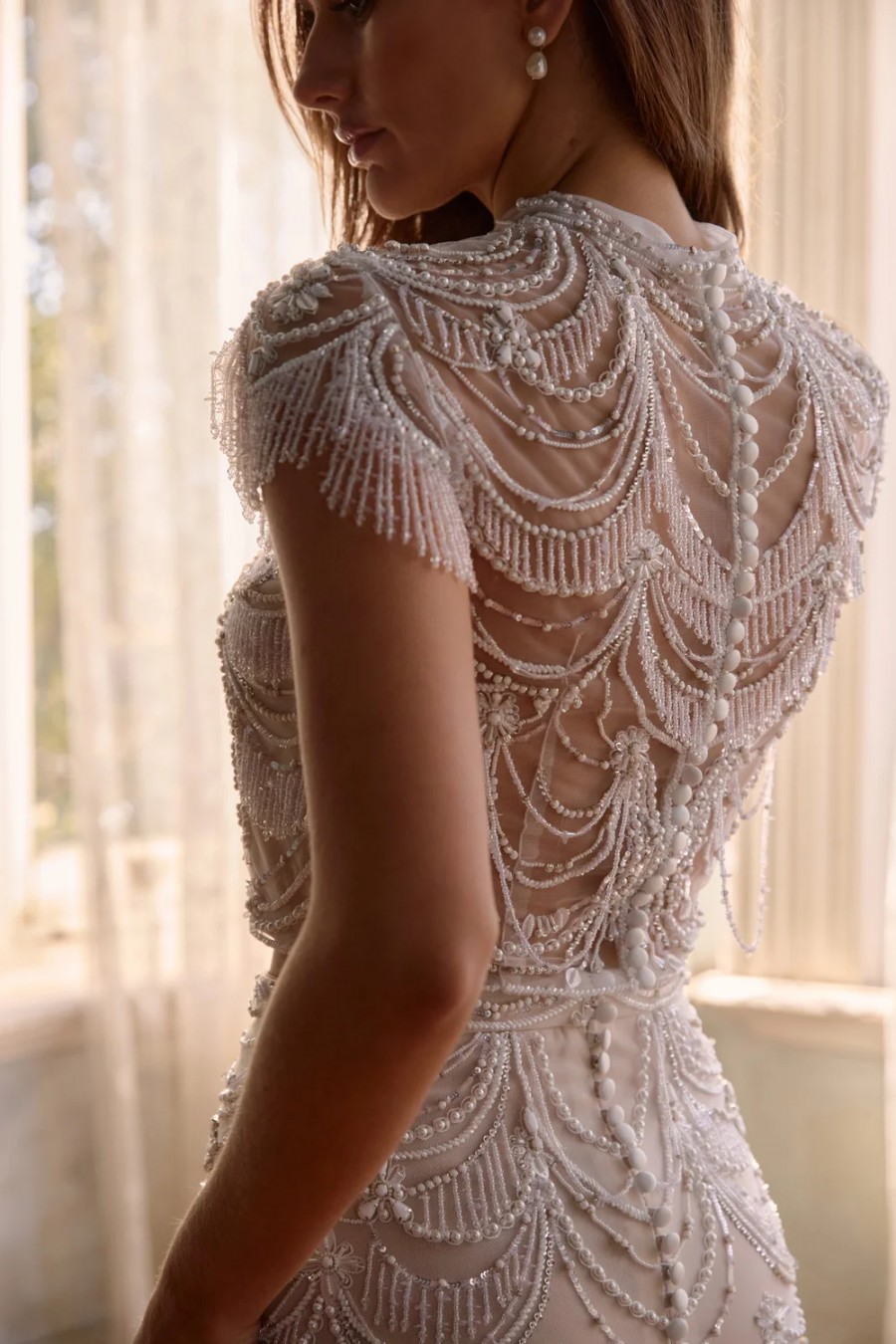
A heavily beaded or crystal-covered gown is one of the most spectacular things to see in person. The way it catches every light source, the way it moves — nothing quite compares. In photographs, however, very heavy embellishment can sometimes overwhelm the image, drawing the eye so completely to the dress that everything else — including the bride's face — becomes secondary.
This is not a reason to avoid embellishment. It is a reason to think about where the embellishment is placed. A heavily beaded bodice with a clean, unembellished skirt tends to photograph beautifully — the detail is concentrated where the eye naturally wants to look, and the skirt gives the image space to breathe. Full head-to-toe embellishment requires a photographer who knows exactly how to balance light and composition to let the bride exist within the dress rather than disappear into it.
Silhouettes reads differently in photographs than in person
The silhouette that looks most flattering in the mirror is not always the silhouette that photographs most beautifully — and the difference can be significant.
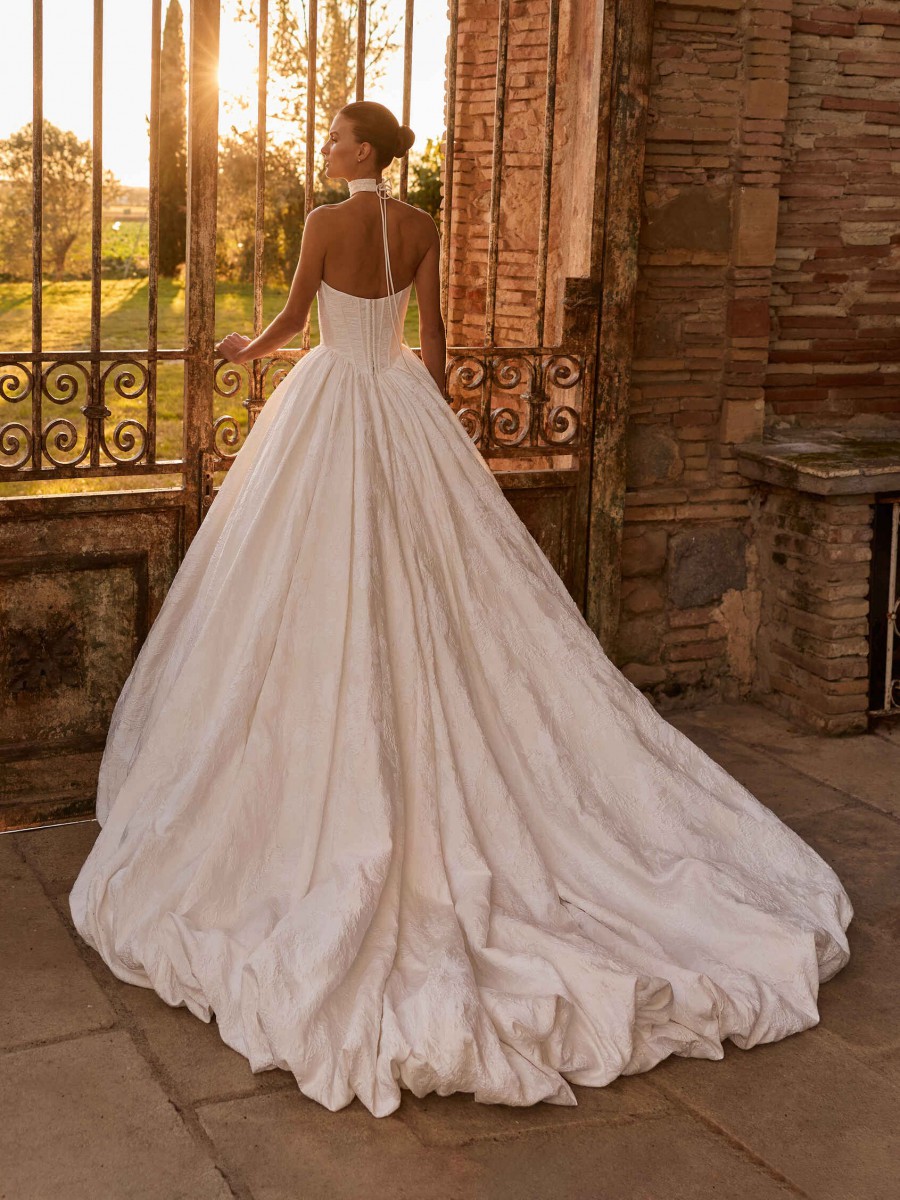
Ballgowns are among the most photogenic silhouettes available. Their volume creates natural drama in wide shots, their shape is immediately recognizable and reads as distinctly bridal, and they move in ways that produce extraordinary photographs — particularly at golden hour, when fabric catches light differently with every step.
Fitted column and mermaid silhouettes photograph beautifully in straight-on or profile shots but can be challenging in candid movement shots, where the restriction of the silhouette is sometimes visible. They reward a photographer who takes time with composition.
A-line and fit-and-flare silhouettes are reliably photogenic in almost every setting — they suggest movement and elegance without the volume of a ballgown, and they tend to flatter a wide range of body types in photographs as well as in person.
The train is one of the most photogenic elements of any dress
If you are considering a train and wondering whether it is worth the practical inconvenience, the photographic answer is almost always yes. A well-photographed train — spread behind the bride on a stone staircase, trailing across a garden path, caught mid-movement — produces some of the most extraordinary wedding images possible. Even a modest chapel-length train adds visual interest and elegance to photographs that a gown without a train simply cannot replicate.
Color and the camera
As discussed in the context of white above, color interacts with camera and light in ways that are worth understanding. A few specific notes:
Soft, muted colors — blush, champagne, dusty blue, sage green, soft grey — tend to photograph exceptionally well. They hold detail, they warm beautifully in natural light, and they create images with a depth and richness that white often cannot match.
Bold, saturated colors are more unpredictable on camera. A deep red or royal blue can photograph magnificently in controlled lighting and become muddied or lose saturation in challenging conditions. If you are considering a bold color, ask your photographer how they handle it.
The veil effect
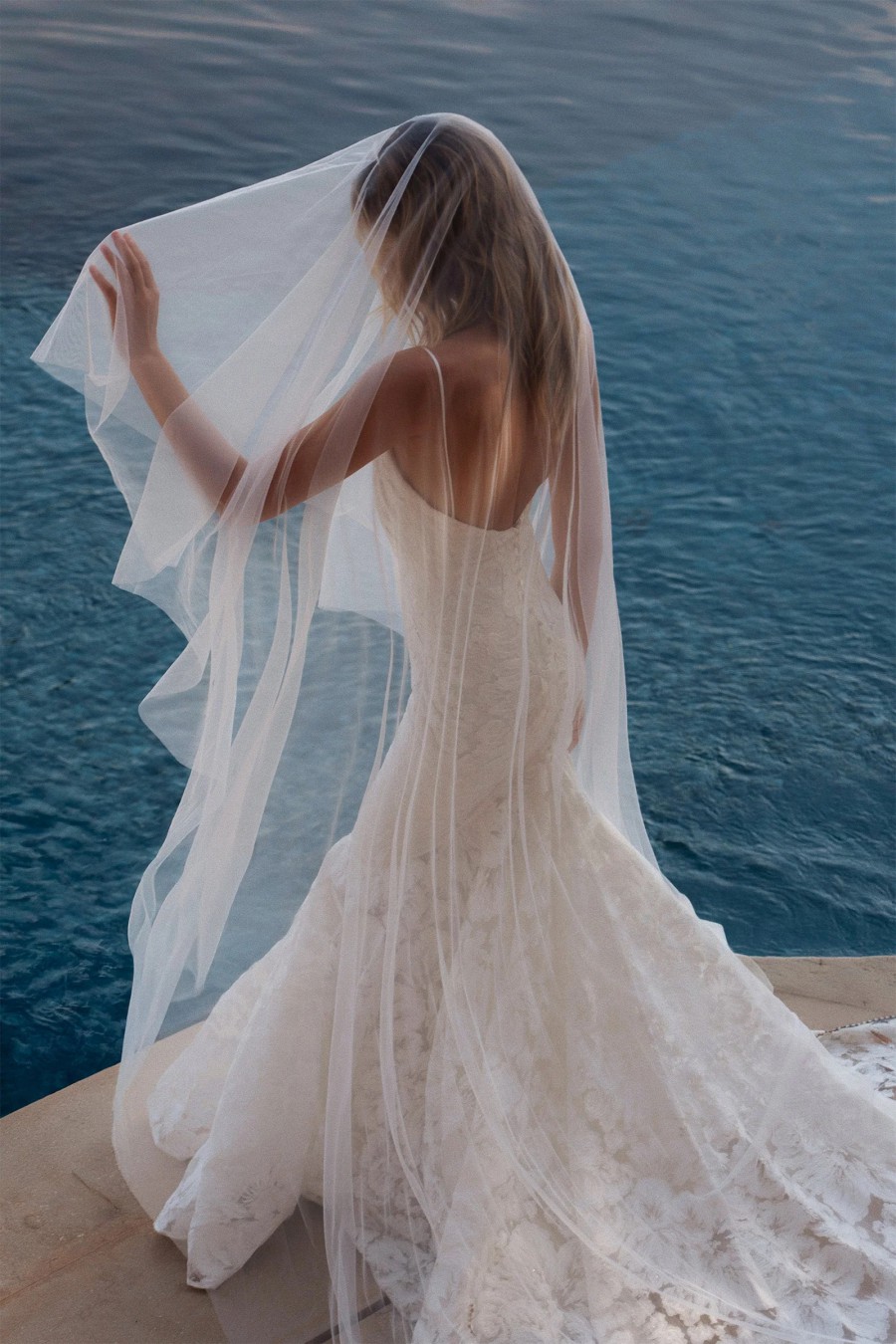
If you are on the fence about a veil, consider this: veils are one of the single most photogenic additions to any bridal look. They add movement, dimension, and a distinctly romantic quality to photographs that almost nothing else can replicate. A cathedral veil caught in a breeze, a blusher veil lifted at the altar, a simple fingertip veil in a portrait shot — the camera loves all of them. If your dress photographs beautifully on its own, a veil makes it even more extraordinary. If your dress is relatively simple, a veil elevates the entire look in images in a way that is immediately, dramatically apparent.
What to ask your photographer before the wedding
Your photographer has seen hundreds of dresses in photographs. They know things about how fabric and color behave on camera that no boutique will ever tell you. Before your wedding — ideally before you buy, but certainly before the day itself — have this conversation: Ask them how they handle high-sheen fabrics in indoor light. Ask whether they have experience with the specific color or fabric of your dress. Ask what time of day produces the best light at your venue, and whether your portraits are scheduled to take advantage of it. Ask to see examples of dresses similar to yours from previous weddings. A great photographer will not only have answers to all of these questions — they will be delighted you asked.
The most important thing
All of this knowledge is useful. None of it should make you choose a dress you love less. The bride who feels completely, utterly herself in her wedding dress — who moves through the day with confidence and joy rather than self-consciousness — will always produce the most beautiful photographs, regardless of the silhouette or the fabric or the color.
The camera captures emotion as faithfully as it captures light. A bride who loves her dress always looks extraordinary in photographs. Start there, and let everything else be an advantage rather than a constraint.


 Vanessa